

Modern Equipment
Many people have had to switch suddenly to working from home during the coronavirus outbreak because of lockdown conditions. Dougal Shaw has spoken to three people with jobs where face-to-face contact is usually seen as essential, but who have found working remotely to be surprisingly successful.
It’s a job that requires trust, intimacy and impeccable listening skills – but does it have to be done face-to-face?
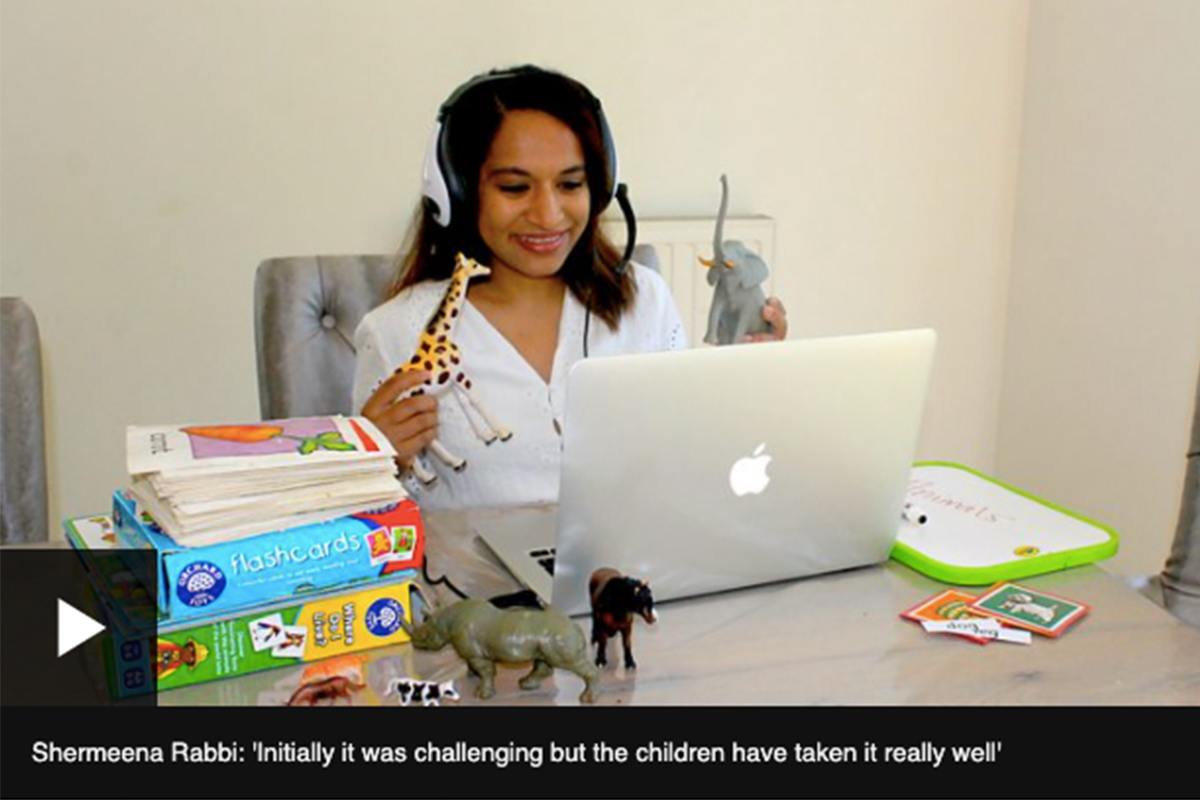
Shermeena Rabbi, 39, is a speech therapist and businesswoman who lives in Essex. She runs a team of 25 therapists who work with people who have communication issues. Many of her clients are families with children who are autistic, or have Down’s Syndrome, or cerebral palsy.
Normally the team works in clinics and schools across London, but since lockdown they have had to do things remotely. The therapist makes a video call from their home to the home of the client. They call this teletherapy.
“Because our work, especially with children, can be so personal, face-to-face, play-based and tactile, we wondered, ‘How’s this going to work?’ We were originally reluctant,” admits Shermeena.
Therapy sessions with children involve working on pronunciation, often by interacting with toys, symbols and books. Therapists also tackle broader issues, like focusing attention, she explains.
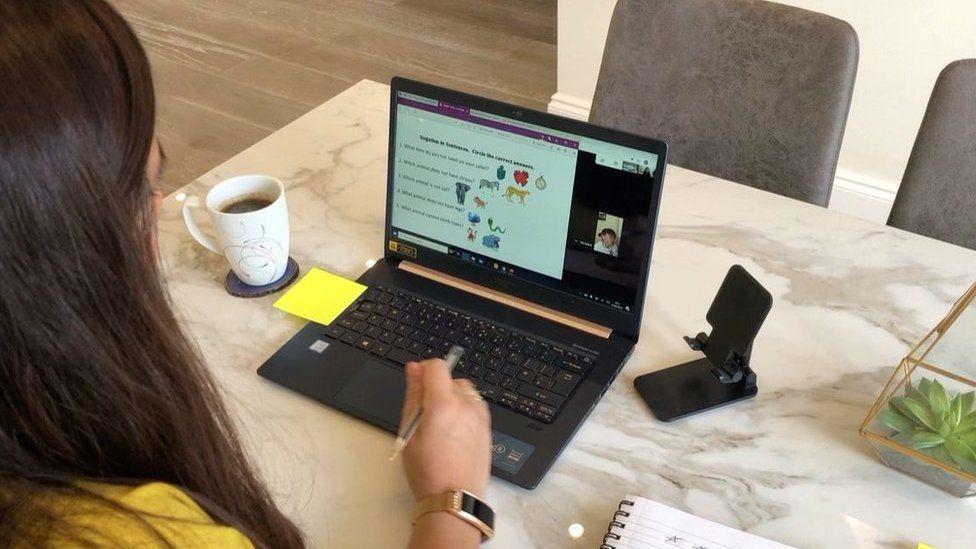 IMAGE COPYRIGHTSHERMEENA RABBI
As the therapists cannot do the physical aspects of the therapy online, they’ve had to delegate this to parents, who wouldn’t always have been present at sessions.
However, that has actually turned out to be something surprisingly empowering and beneficial, says Shermeena.
She is impressed at how effective the online therapy sessions have been. “For younger patients the digital screen is just part of normal life,” she says.
It’s also nice to see patients in their home setting and it cuts down on travel costs for everyone, she adds.
The speech therapists use apps such as WhatsApp, Google Meet and FaceTime.
They follow professional tele-health guidelines, a checklist that ensures things like good microphone quality and the ability to see clearly the patient’s face, including lips and mouth.
The team meets daily at 2.30pm for their own “fancy-a-cuppa” video call, when they chat and share knowledge.
The consensus is they will continue to offer this alternative service even when lockdown eases, and they will downsize their physical premises.
