

Speech, Language and Communication Needs for Children without EHCPs
Unlocking Language is dedicated to supporting children’s communication development, regardless of whether they have an educational health care plan. With bespoke approaches and expertise, we understand and address each child’s unique speech and language communication needs (SLCN).
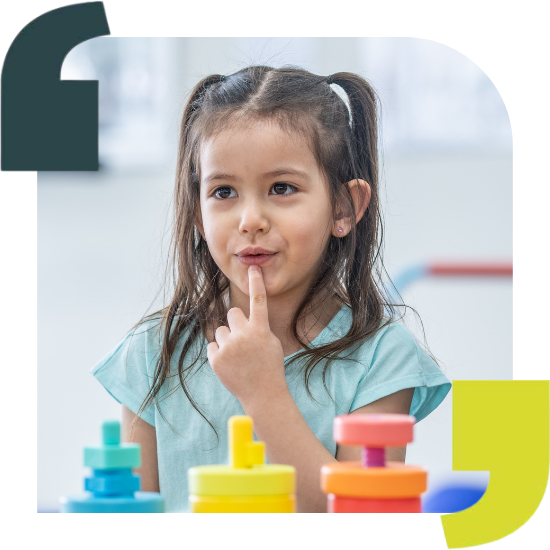


Every child deserves the opportunity to express themselves and connect with the world around them. However, some children face challenges in developing the necessary skills to communicate effectively. SLCN, or Speech, Language and Communication Needs, refers to difficulties that can affect the way children understand, express, or both understand and express their thoughts and feelings. These challenges can affect their ability to interact socially, perform academically, and express their thoughts and feelings.
At Unlocking Languages, we offer specialised services to help children with SLCN navigate these challenges. By providing targeted support and intervention, speech and language therapy helps children develop the skills they need to communicate more effectively, enhancing their confidence and independence.
Our team adopts a family-centered approach, working collaboratively with parents and caregivers to ensure that therapy is effective and supportive. We believe in empowering families with the knowledge and tools they need to support their child’s communication journey.

Empowering Confidence
Common Communication Challenges in Children
SLCN can manifest in various ways in children, and the signs can vary based on the child’s age, the severity of the challenge, and the specific area of speech or language affected. Some common ways SLCN might appear include:
Delayed Speech: A child may speak later than their peers or use fewer words and simpler sentences than expected for their age.
Difficulty Understanding: They might often ask for repetitions, misunderstand instructions, or appear to ignore what’s being said to them.
Difficulty in Forming Sounds: They might mispronounce words or omit certain sounds, making their speech hard to understand.
Limited Vocabulary: Using a restricted set of words or frequently using unspecific language like “thing” or “stuff.”
Grammatical Issues: Difficulty using or understanding complex grammar structures, such as past tense or plurals.
Social Communication Challenges: Problems with understanding and using language in different social situations, like not knowing how to start a conversation, take turns, or change the subject.
Repetitiveness: Repeating certain phrases or words, or revisiting the same topic frequently.
Difficulty with Non-verbal Communication: Struggling to understand gestures, facial expressions, or tone of voice.
Literacy Challenges: Problems with reading and writing, often rooted in language comprehension or phonological awareness difficulties.
Auditory Memory Issues: Difficulty remembering and processing information given orally, which can impact following instructions or recounting stories.
Children with SLCN might also exhibit frustration, behavioural issues, or low self-esteem due to their communication challenges. It’s essential to identify and support these children early to provide them with the best opportunities for successful communication and learning.
Our Treatments
Speech therapists, or speech and language therapists (SLTs), employ a multifaceted approach to treat SLCN based on the unique needs of each child. Their interventions are evidence-based and are tailored to the child’s age, severity, and type of speech or language difficulty.
The ultimate goal of speech therapy for SLCN is to enhance the child’s ability to communicate effectively and confidently in all areas of their life, whether that’s at home, school, or in social situations.
Assessment: The first step is always to assess the child’s speech and language skills thoroughly. This might involve standardised tests, observations, and discussions with parents or teachers to get a comprehensive picture.
Individualised Therapy Plans: Based on the assessment, SLTs design targeted therapy sessions that focus on the specific areas where a child needs support.
Skill Development: Through various activities and exercises, therapists work on building essential speech and language skills, such as vocabulary, grammar, pronunciation, or social communication skills.
Augmentative and Alternative Communication (AAC): For children who struggle with verbal communication, therapists might introduce tools and systems like sign language, picture communication systems, or voice output devices.
Social Communication Training: For children who struggle with the social aspect of language, SLTs provide training in understanding non-verbal cues, turn-taking, maintaining a topic, and other conversation skills.
Literacy Support: Many children with SLCN have difficulty with reading and writing. SLTs can work on phonological awareness, reading comprehension, and other literacy skills.
Parent and Teacher Training: Therapists often provide guidance to parents and teachers on how to communicate with the child, modify their environment, or support the child’s speech and language development.
Group Therapy: Working in groups can provide children the opportunity to practice their communication skills with peers and learn from one another.
Feedback and Monitoring: Regular feedback sessions help monitor the child’s progress and adjust interventions as needed.
Collaboration: SLTs frequently collaborate with other professionals, such as teachers, psychologists, and occupational therapists, to ensure the child receives holistic care.

Madeleine Swan

Lydia Chong

Abirami Singalingam
Principal Speech and Language Therapist
Madeleine Swan
She/Her
Madeleine graduated from City University in 2011 with a Postgraduate Diploma in Speech and Language Therapy (Distinction) and has been working at Unlocking Language since 2015.
As the Clinical Lead for mainstream schools, Madeleine manages a team of therapists, supporting their clinical development and ensuring a high-quality service. She also oversees our company supervision policy. Madeleine specialises in working with students aged 3-11 who attend mainstream schools, providing assessments and interventions for students with speech sound disorders, Developmental Language Disorder and Autism Spectrum Disorder amongst other diagnoses. She also delivers training and works closely with other members of staff to support the communication development of targeted students.
Madeleine has furthered her knowledge by attending additional training on Makaton, VERVE, Michael Palin PCI and school-aged therapy approaches; Word Aware, Shape Coding, Attention Autism, the evidence base for Developmental Language Disorder and Supervision.
She has experience with a wide range of therapy approaches, including PECS, Intensive Interaction, SCERTS, colorful semantics, and Talkabout.
Her favorite thing about working at UL is ‘My colleagues! I love working with such a supportive, diverse, and talented group of people’.
When she’s not working, you can find Madeleine reading, watching independent films, and doing pen drawing.
Clinical Lead Speech and Language Therapist
Lydia Chong
She/Her
Lydia completed a BSc in Speech and Language Therapy at the University of Reading and has been working as a therapist since 2016. Her particular professional interests lie in teletherapy and the secondary setting, working with children with ASD and SEMH. She is a member of the Shuri Network – the first NHS and care network of BAME women in digital health.
Lydia focuses on delivering therapy that is fun and functional to clients. She believes in empowering individuals and maximizing their potential. She has experience with various approaches, such as PECS and Makaton.
On working at UL: ‘Everyone is really friendly and helpful with clinical questions.’
When she’s not working, you can find Lydia walking, traveling, or playing the piano or ukulele.
Languages:English, Mandarin, Malay, knowledge of Cantonese
Phone:0207 536 9299
Clinical Lead Speech and Language Therapist
Abirami Singalingam
She/Her
Abi undertook her BA at Case Western Reserve University in Cleveland, Ohio, USA, and she studied for her MA in Pennsylvania, USA. Before moving to London in 2020, she worked for various school districts in Chicago and across Maryland.
Her areas of interest and expertise include working with school-age children and a variety of speech and language difficulties.
Abi is also a member of the American Speech-Language-Hearing Association.
Her favorite thing about working at UL is ‘how everyone is so supportive and what an amazing resource everyone is.’
When she’s not working, you can find Abi reading fantasy books, traveling, and eating Thai and Sri Lankan food
Your questions answered
Can’t find the answer to your question? Give us a call, our customer service team would love to help.
What is speech and language therapy?
Speech and language therapy involves assessing and treating communication disorders to help children improve their speech, language, and social communication skills.
How do I know if my child needs speech therapy?
If your child is experiencing difficulties with speech clarity, language comprehension, or social interactions, it may be beneficial to consult a speech-language pathologist for an evaluation.
What can I expect during a speech therapy session?
Speech & Language Therapy sessions are tailored to each child’s needs and may include activities to improve speech sounds, language understanding, and social communication skills. Parents are often involved to reinforce learning at home.
How long does Speech & Language Therapy take?
The duration of speech & language therapy varies depending on the child’s specific needs and progress. Our experienced therapists will work with you to develop a plan that best supports your child’s development.
Speak to us today about your Child's SLCN
If you have concerns about your child’s speech, language, or communication skills, we invite you to contact our clinic to schedule an appointment. Our dedicated team is here to provide the support and guidance your child needs to thrive. Reach out to us today to learn more about our services and how we can help your child succeed.
