

Speech & Language Therapy for Children with Complex Needs and Autism
At Unlocking Language, we diagnose children with complex needs and autism, offering them tailored support to guide their journey towards confident communication.


Speech and language therapy is a specialised form of therapy designed to help individuals improve their communication skills. For children with complex needs and autism, effective communication is crucial for their overall development and quality of life. They face a blend of cognitive, sensory, and emotional challenges, alongside specific autism-related behaviours.
SLT focuses on enhancing both verbal and non-verbal communication, helping children express their thoughts and feelings more effectively. At our SLT clinic, we understand the unique challenges these children face and provide tailored support to enable them to communicate with confidence, ensuring holistic care.

“Overcoming Challenges
Complex Needs
In the context of speech therapy, ‘complex needs’ in children refers to a combination of communication challenges that might stem from multiple sources, such as cognitive, physical, sensory, and neurological factors. These children require multifaceted, often interdisciplinary approaches to effectively address their speech and language development.
What we will do
- Conduct a comprehensive assessment to understand the unique combination of challenges faced by the child.
- Design an individualised therapy plan that addresses each facet of the child’s complex needs.
- Collaborate with other professionals, such as occupational or physical therapists, to ensure a holistic approach.
- Equip caregivers with tools and strategies to support the child’s communication development in daily life.
- Continuously adapt the therapy approach based on the child’s progress and evolving needs.
Autism
In the context of speech therapy, autism is often defined as a developmental disorder characterised by challenges with social communication, repetitive behaviours, and restricted interests. Children with autism may:
- Struggle with understanding and using verbal and non-verbal communication.
- Have difficulty reading and interpreting social cues, facial expressions, and emotions.
- Exhibit echolalia (repeating words or phrases) or have unique speech patterns.
- Experience challenges in initiating and maintaining conversations.
- Find it hard to understand abstract language, sarcasm, or idioms.
What will we do?
A speech therapist will assist individuals with autism in the following ways:
Social Communication Skills: They will offer training in recognising and appropriately responding to social cues, understanding facial expressions, and managing conversational turn-taking.
Language Development: Therapists will help in expanding vocabulary, understanding and using complex sentences, and improving overall language comprehension and expression.
Speech Clarity: For those with articulation challenges, therapists will provide exercises and techniques to improve speech sound production.
Understanding Non-literal Language: They’ll assist in deciphering idioms, sarcasm, and abstract concepts, which can often be challenging for those with autism.
Augmentative and Alternative Communication (AAC): For non-verbal individuals or those with limited speech, therapists might introduce and train in the use of picture symbols, communication devices, or sign language to facilitate communication.
Reducing Echolalia: Introducing strategies to transform repetitive or echoed speech into functional communication.
Enhancing Play Skills: Especially for younger children, therapists may guide structured play sessions to boost symbolic play and social interaction.
Supporting Caregivers: They’ll offer guidance to parents, teachers, and other caregivers on how to support and reinforce communication skills in everyday settings.

Madeleine Swan

Lydia Chong
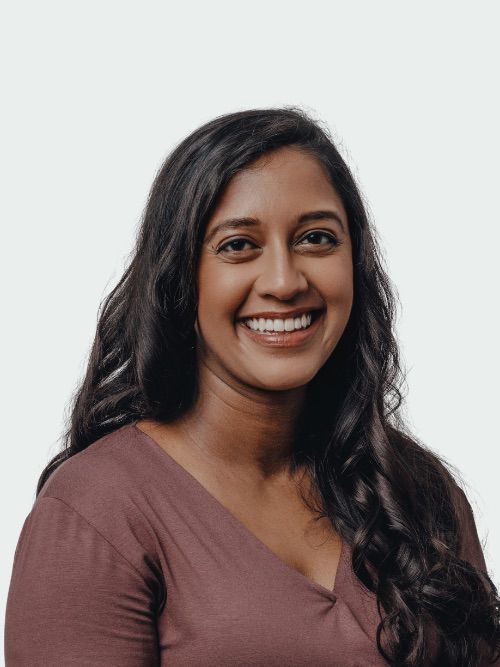
Abirami Singalingam
Principal Speech and Language Therapist
Madeleine Swan
She/Her
Madeleine graduated from City University in 2011 with a Postgraduate Diploma in Speech and Language Therapy (Distinction) and has been working at Unlocking Language since 2015.
As the Clinical Lead for mainstream schools, Madeleine manages a team of therapists, supporting their clinical development and ensuring a high-quality service. She also oversees our company supervision policy. Madeleine specialises in working with students aged 3-11 who attend mainstream schools, providing assessments and interventions for students with speech sound disorders, Developmental Language Disorder and Autism Spectrum Disorder amongst other diagnoses. She also delivers training and works closely with other members of staff to support the communication development of targeted students.
Madeleine has furthered her knowledge by attending additional training on Makaton, VERVE, Michael Palin PCI and school-aged therapy approaches; Word Aware, Shape Coding, Attention Autism, the evidence base for Developmental Language Disorder and Supervision.
She has experience with a wide range of therapy approaches, including PECS, Intensive Interaction, SCERTS, colorful semantics, and Talkabout.
Her favorite thing about working at UL is ‘My colleagues! I love working with such a supportive, diverse, and talented group of people’.
When she’s not working, you can find Madeleine reading, watching independent films, and doing pen drawing.
Clinical Lead Speech and Language Therapist
Lydia Chong
She/Her
Lydia completed a BSc in Speech and Language Therapy at the University of Reading and has been working as a therapist since 2016. Her particular professional interests lie in teletherapy and the secondary setting, working with children with ASD and SEMH. She is a member of the Shuri Network – the first NHS and care network of BAME women in digital health.
Lydia focuses on delivering therapy that is fun and functional to clients. She believes in empowering individuals and maximizing their potential. She has experience with various approaches, such as PECS and Makaton.
On working at UL: ‘Everyone is really friendly and helpful with clinical questions.’
When she’s not working, you can find Lydia walking, traveling, or playing the piano or ukulele.
Languages:English, Mandarin, Malay, knowledge of Cantonese
Phone:0207 536 9299
Clinical Lead Speech and Language Therapist
Abirami Singalingam
She/Her
Abi undertook her BA at Case Western Reserve University in Cleveland, Ohio, USA, and she studied for her MA in Pennsylvania, USA. Before moving to London in 2020, she worked for various school districts in Chicago and across Maryland.
Her areas of interest and expertise include working with school-age children and a variety of speech and language difficulties.
Abi is also a member of the American Speech-Language-Hearing Association.
Her favorite thing about working at UL is ‘how everyone is so supportive and what an amazing resource everyone is.’
When she’s not working, you can find Abi reading fantasy books, traveling, and eating Thai and Sri Lankan food
Your questions answered
Can’t find the answer to your question? Give us a call, our customer service team would love to help.
What techniques are effective in speech therapy for children with autism?
There are several engaging speech therapy exercises that can be beneficial for children with autism, including:
- Making animal noises to stimulate verbal engagement.
- Teaching essential words for everyday communication.
- Using favorite toys and snacks as motivational tools.
- Providing positive reinforcement to encourage progress.
- Offering multiple choices to promote decision-making skills.
- Playing sorting games to enhance categorization skills.
- Reading short stories together to improve language comprehension.
- Engaging in sensory activities to support overall communication skills.
What are typical objectives of speech therapy for children with autism?
Speech therapy goals for children with autism often focus on enhancing verbal communication, which can include improving spoken language. Additionally, goals may involve mastering nonverbal communication skills, such as using signs, gestures, or alternative communication methods like pictures or assistive technology.
When do children with autism typically achieve fluent speech?
Research indicates that about 24% of children diagnosed with autism and 59% of those diagnosed with pervasive developmental disorder not otherwise specified (PDD-NOS) achieve fluent speech by the age of 9. Fluent speech is defined as the ability to form complex sentences and discuss topics beyond the immediate physical context.
How is speech delay treated in children with autism?
Although there is no cure for autism, early intervention is crucial for treating speech delay in autistic children. Effective treatment usually includes a combination of therapies such as speech therapy, occupational therapy, and behavioural therapy. These interventions aim to significantly enhance communication skills.
Speak to us today about your Child's SLT needs
Contact us today to learn more about how our speech and language therapy services can make a difference in your child’s life. Whether you have questions about our services or want to schedule an appointment, our friendly team is here to help. Together, we can support your child in developing the communication skills they need to thrive.
